
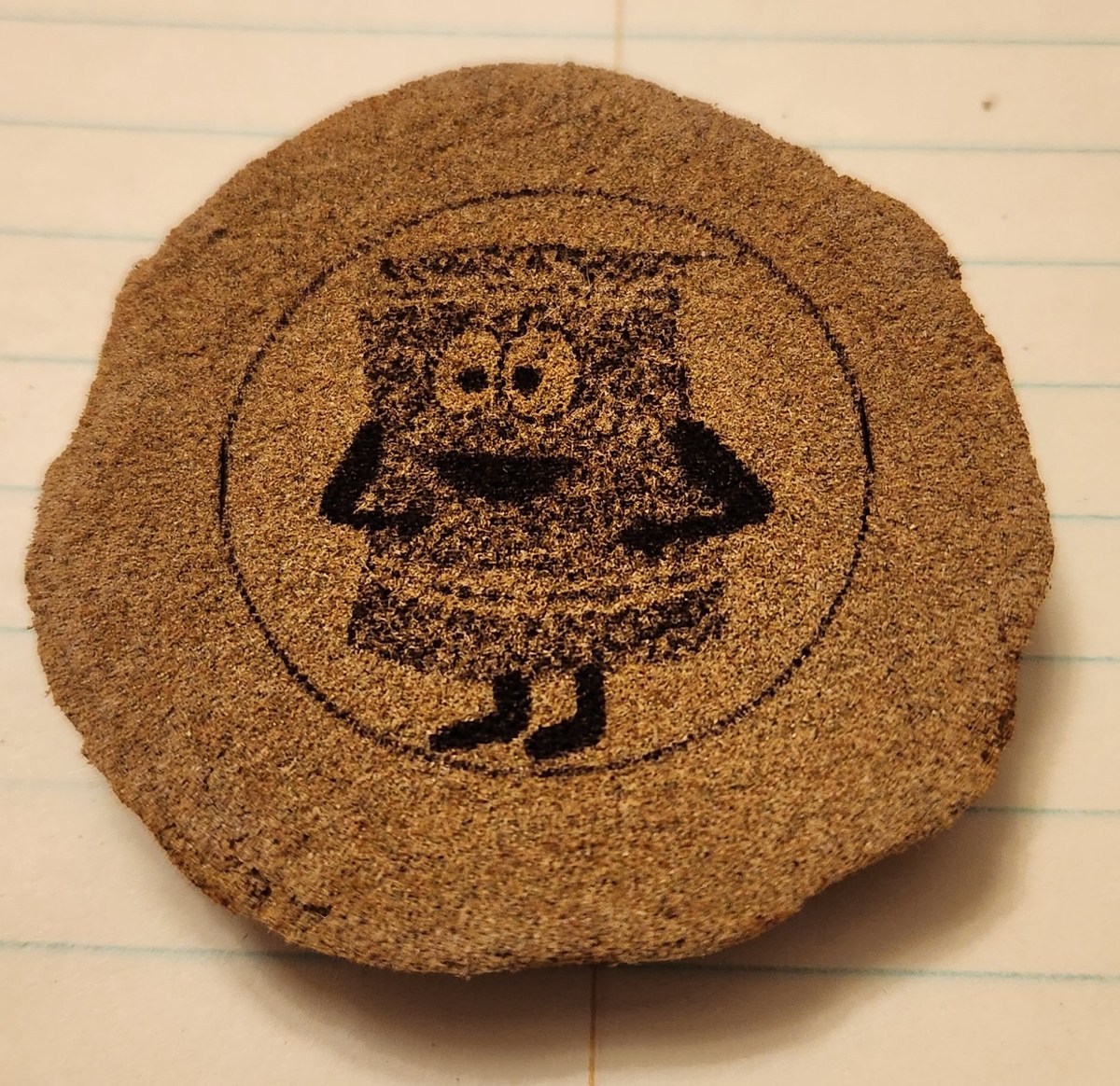
Natural Hash verses Imitation Hash
by
Dr. Norman P. Johnson, Cofounder Yeti Scat Trails
Smart cannabis connoisseurs eventually realize that smoking all that “rope” or hemp in your typical joint just clogs the lungs with cancer-causing tars, acids, and half burned cellulose. Long ago when drugs were a desired and revered part of daily life and integral to a properly run tribal society, growers learned how to isolate, cultivate and harvest the part of the plant known for its smoking enjoyment and therapeutic effects. Soon they developed a refining and preserving process creating a true natural hashish. This was done, not surprisingly, at a time in human civilization when similar processes were being developed in the cultivar communities springing up worldwide such as wine and cheese making.
Natural hashish was traditionally made by separating, concentrating, compressing and curing of the nearly microscopic cannabinoid-containing semi-transparent bulbs or pods attached to the plant by white tiny stalks. Under the naked eye and bright lights, these rosin pods shine like little dew drops or snowy speckles and are also known as trichomes. Original hash making methods result in a natural brown colored semi-hard gelatinous substance identifiable by the microscopic presence of entire rosin pods, pod parts, other similar sized associated structures and free pod contents rich in a complex organic rosin containing CBD’s, THC’s and terpenes. In practice, hash was made from a single known varietal plant, grown in one location and immediately following each year’s annual harvest. In some high-altitude regions, the well-trimmed flower buds were washed in ice cold mountain water releasing the trichomes which are subsequently sieved out of the water bath by finely woven silk. It is then hand-pressed into clay-like blocks, thoroughly cool dried and put up to age and cure under cold dry high-altitude conditions.
Modern processors unfamiliar with cannabis history and traditions may mistakenly think that any old concocted mixture of dried rosin pod parts falling off plant material being processed for the conventional cannabis smoking market and subsequently mixed willy-nilly with finely ground plant material and doped with purified THC derived from a chemical machine. This recipe for hash is roughly equivalent with say the recipe for “Mad Dog 20/20” or “Night Train Express” being a qualified method for making fine wine. Technically it’s purple, contains grape juice in some form or another along with the requisite bang for your buck of 20% corn ethanol. But they are not considered true wines, even by those who consume it. At best it can be called a hardened grape juice but no actual wine consumer would ever be caught dead drinking this swill, let alone toasting its provenance.
In only the last hundred years or so, cannabis has been the innocent victim of mindless fear, political hackery and gross misrepresentation of its long and distinguished history. Prior to this hysteria, much of its many critical benefits and useful qualities had been enjoyed by indigenous mankind over almost the entire globe. Maybe, instead of everyone being high and refusing to go to war or work, modern autocrats dictated only tobacco and alcohol to be the preferred addictive drugs for pacifying and controlling society. These drugs didn’t threaten their profitable war-mongering while cannabis proved to be fatal, as evidenced by the Vietnam war.
Now that we have finally moved beyond those unfortunate dark ages and into the renewed enlightenment of responsible self-prescribed personal use of mind-altering substances, true hash is regaining its stature as the optimum and most desirable way to enjoy the cannabis smoking experience. Hash is a natural way to consume purified cannabis as most of the incumbent contaminates are removed while capturing the desirable parts containing all the flavorful nuances and delectable variations the complex active cannabinoids can provide from new modern-day high-bred varietal super-weeds.
Ancient man first enjoyed the benefits of this plant since choosing it several hundred thousand years ago as the principal resource for making baskets and rope. This technology alone helped man succeed tremendously in harsh environments allowing the efficient trapping of fish and animals for food, fur and leather, the carrying of invaluable survival gear for man on the move and providing resources for clothing and even the rope holding together large structures. Soon the plant was cultivated on a large scale due to its ease and reliability for tending in harsh environments. It’s basically a weed. As a real bonus, seeds from the plant were harvested as an important source of protein and oil. Hemp rope was used in sailing vessels that first spanned the world spreading knowledge and hash everywhere.
And of course, along with its physical properties, man found quickly that when some parts were smoked, a new highly satisfying state of wellbeing is achieved that calms and focuses the newly built formidable brain into a reflective contemplative awareness. This soon became a necessary ingredient the revered elders used liberally for making fateful decisions affecting the very future of the tribe. The use was so universally adopted that most all societal decisions were being well reasoned and thought through by this practice and became almost a sacred and civilizing necessity on the road to urbanization. It’s been handed down to us today as a social ceremony perhaps like serving guests tea in Japan or toasting with fine drink one’s health and happiness at gatherings of friends or commemorating significant celebratory events. It is to be savored and enjoyed as are other desirable, unique and satisfying experiences that make life special, even today.
Most people of taste and refinement enjoy the finer side of life’s rare experiences when they get the privilege to indulge in rare delights, exotic flavors and thoughtful experiences such as a fine wine, savory cheeses or very old Scotch whiskies. Natural hashish is not just another way to get high. It should be carefully prepared, nurtured and enjoyed for the singular feelings and moments it provides and given all the respect and appreciation of its many qualities for providing such rich and uniquely human experiences. It is considered the finer way to enjoy the cannabis high and it brings to the discerning consumer a delicious and delightful alternative for enjoying all the many cannabis effects in a proven pure product that is recognizably consistent yet uniquely different based on the character of the plant employed.
So, how does the hash novice choose correctly when visiting your favorite cannabis dispensary. If you want to be assured of getting the real deal, inspect their offerings of hash and look for two things. First inspect the chunkiness of the hash to see if it is solid and cut from a bigger block or powdery, loose and flakey. Flakey hash is usually made from dry sifted trichomes and microscopic leaf material that are by-products of trimming flowers. True hash is made from carefully harvested trichomes compressed and cured under cold dry conditions until the outside of the hash patty or ball gains a dark brown patina that locks in the full spectrum of cannabinoids trapped inside. Over time, the hash goes through structural and molecular changes under the patina transforming and solidifying the various constituents into a solid brown homogeneous brittle substance when cold but bendable like chewed gum at warm body temperatures. When first heated, it partially melts and bubbles slightly releasing low temperature terpenes and THC’s. Higher temperatures release heavier CBD’s and other cannabinoid molecules and when completely consumed, it should leave only a small white ash.
Also look carefully at the color of the hash. Artificially made rosin hash often looks pale and more like dried glue than real hash. THC refined from CO2 extraction machines, is often a jelly like semi-translucent substance either white or slightly amber in color and is usually just that, chemically produced rosin disguising itself as hash. That’s the equivalent in the alcohol world of classifying Everclear as just a very strong form of natural fermentation.
Above all, look to see if the hash has a plant variety designation. Hash makers are not yet obligated to make natural hash from a single variety of plant but the real hash makers do. Again, just like fine wines, the process starts on the farm and goes straight from the vine to the crushers, the fermentation vats and then into the casks. All serious wines are usually derived from a single vintage of grape from one estate or a group of estates in the same agricultural region and harvest year. True hash makers should label their product with the variety name, location and year of harvest just like vintage wines. Only then is the consumer assured of getting natural hashish made in the traditional hand-crafted manner capable of providing the true and complete hashish experience that has been appreciated and enjoyed for thousands of years and hopefully for thousands more.